$0 upfront lease options may be available to qualified homeowners. Savings and program terms vary.
A solar lease allows eligible homeowners to use solar equipment owned by a third-party provider while making a monthly lease payment.
Depending on the program, little or no upfront payment may be available. The actual cost and potential savings depend on the lease terms, system production, household electricity use, and utility charges.
Trusted Solar Solutions helps homeowners compare lease, purchase, and financing options based on their roof, electric bill, utility company, and goals.
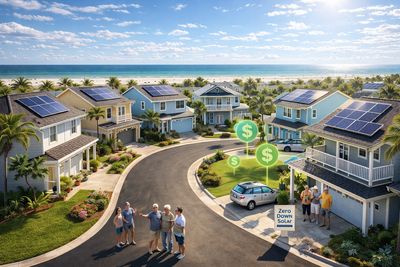

With a solar lease, a third-party provider owns the solar equipment installed on your home. You make a monthly lease payment for the right to use the system and the electricity it produces.
You will normally continue to receive a utility bill for electricity and other charges not offset by the solar system.
Depending on the agreement, the solar payment may remain fixed or increase by a scheduled percentage each year. Maintenance, insurance, roof work, and home-sale responsibilities are determined by the lease contract.
✓ Little or no upfront payment may be available
✓ A scheduled monthly solar payment that may be easier to budget
✓ Covered equipment service may be handled by the system owner
✓ The ability to use solar without purchasing the equipment
✓ Battery backup may be available with certain programs

No. Solar is not free, and $0 upfront does not mean there is no cost.
A solar lease may allow an eligible homeowner to begin without a large upfront payment, but the homeowner still makes a monthly lease payment and normally keeps a utility account.
The combined cost may be lower than what the homeowner would otherwise pay for electricity, but that depends on the system’s production, household energy use, utility charges, lease payment, and any annual payment increases.
We’ll review the numbers with you so you can compare the full cost before making a decision.
A lease may be worth considering if you:
✓ Prefer to avoid a large upfront purchase
✓ Value a more predictable solar payment
✓ Do not need to own the equipment
✓ Understand the payment terms, including any scheduled annual increase
✓ Are comfortable with the transfer or buyout requirements if you sell your home
A lease is not automatically the best option. We’ll compare it with available ownership and financing options based on your goals.
Not sure whether leasing, purchasing, or financing makes the most sense for your home?
We'll review your electric bill, roof, utility company, and goals so you can compare the available options clearly.
No pressure. Just a straightforward review.
Solar Lease FAQs
Solar lease programs generally require approval. Credit and eligibility requirements vary by provider.
Usually, yes. Solar can reduce the electricity you purchase from the utility, but minimum charges, taxes, fees, and electricity not offset by the system may remain.
It depends on the agreement. Some lease payments remain fixed, while others include a scheduled annual increase. We’ll show you the payment structure before you decide.
Some lease programs allow a compatible battery. A battery can provide backup electricity during certain outages, but availability and coverage depend on the equipment and program.
Transfer options vary by agreement. The new homeowner may need to qualify, or the lease may require a transfer, payoff, or buyout. We recommend reviewing those terms before signing.
The system owner generally handles covered solar-equipment service, but the lease determines exactly what is included. Roof repairs, removal and reinstallation, landscaping, insurance, and damage may be treated separately.
We'll review your home and electric bill before recommending anything.